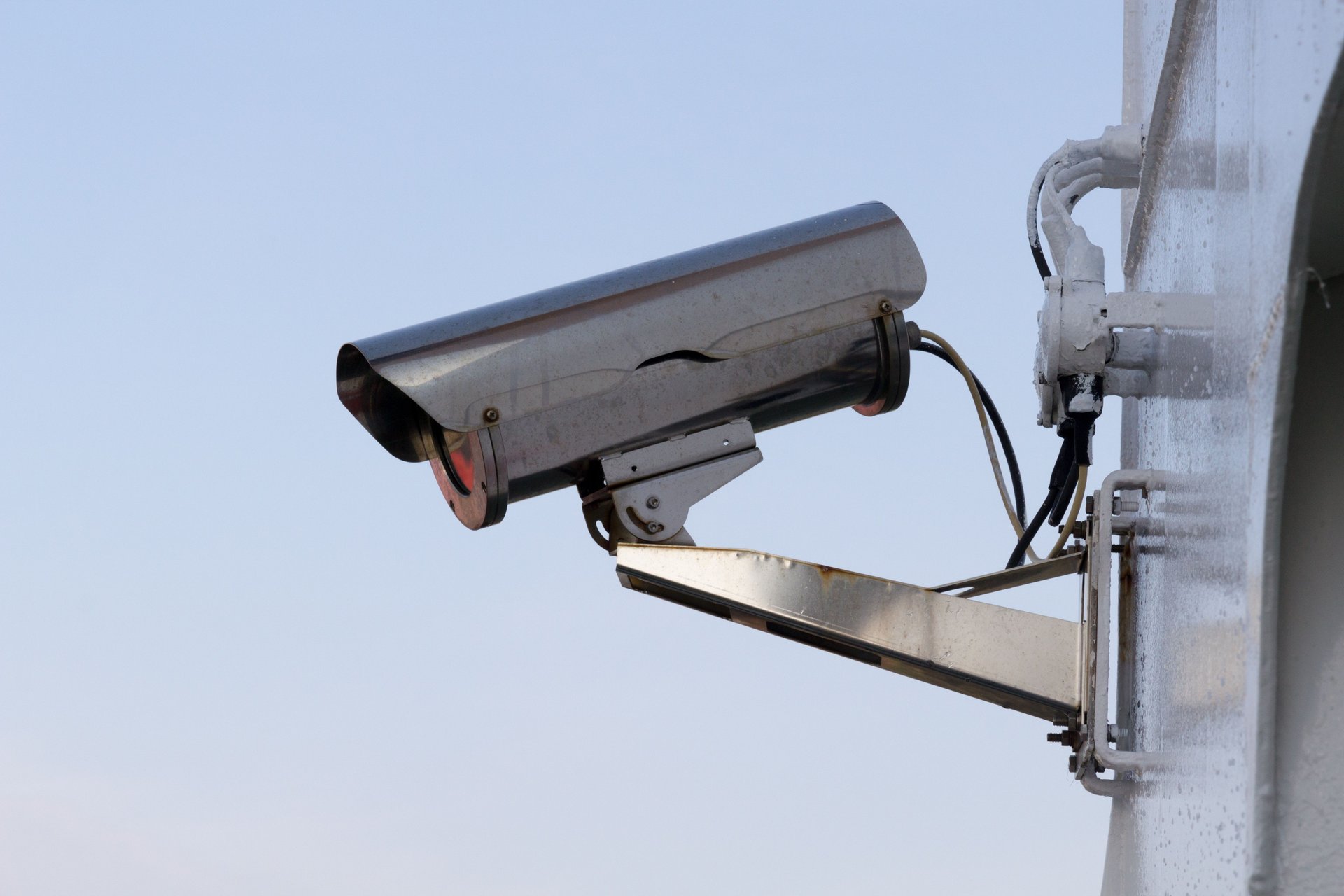
An IP camera mounted at 13 feet with a 2.8 mm lens produces a Google Earth view of the floor: nobody’s face is identifiable. At 5.5 feet, the same lens delivers a portrait with usable facial recognition.
The math behind that difference has four variables: mounting height, tilt angle, focal length, and target DORI level [1][3]. Get any of them wrong and your footage detects motion — not people.
The standard that defines “usable facial recognition” is IEC 62676-4:2025, refreshed this year. It defines six operational levels with pixel-per-meter (PPM) thresholds: Overview 20 PPM, Discern 80 PPM, Perceive 125 PPM, Characterize 250 PPM, Scrutinize 1500 PPM [5]. For retail and QSR, Perceive (125 PPM) and Characterize (250 PPM) are the ranges that matter — one tells you what happened, the other tells you who did it [4].
For facial recognition at an entry, IEC and field testing converge: mount between 5 and 6.5 feet (1.5-2 m) at eye level [1][7]. For wide-area perimeter coverage, 10-13 feet (3-4 m) [1]. Above 15 feet (~4.5 m), facial detail drops sharply unless you pair with a long lens (≥12 mm) [8].
Tilt angle is pure geometry. The formula is HFOV = 2 × arctan(W_sensor / 2f) [2]. A 2.8 mm lens on a 1/2.8” sensor (W ≈ 5.6 mm) gives HFOV ≈ 90° [2][3]. Tilt the camera 30° downward from 13 ft and you see an elliptical footprint — but the ground directly under the lens has a blind spot that depends on tilt and height [3]. Higher mount → steeper tilt needed to close the gap. Formula: blind spot ≈ height / tan(90° − tilt − VFOV/2).
( each vendor quotes its own nominal angle — Hikvision may list 106° on a lens where another brand says 110°; generic arctan calculators underestimate real angles by 10-30° [2] )
Every time I review a deployment for tv4agent, the rare question isn’t “what camera do I buy?”. It’s “at what height, with what lens?”. That answer decides whether your footage holds up in court or just confirms someone walked past.
P.S. The last camera you installed — at what height did it actually end up? And did the lens cover the face at the expected distance, or only confirm that someone was there?
📰 Source: CCTVplanner Camera Placement Guide 2026 + JVSG FOV Calculation + Axis Newsroom IEC 62676-4:2025 + IPVM Elevator Surveillance Guide + InfinitiOptics DORI whitepaper. Data accessed 2026-09-05.
Sources
[1] CCTVplanner — Camera Placement Guide 2026 — https://cctvplanner.io/blog/camera-placement-guide [2] JVSG — CCTV Field of View Calculation — https://www.jvsg.com/cctv-field-of-view-calculation/ [3] CCTV Design Tool — FOV Calculator + DORI Zones — https://www.cctvdesigntool.com/calculators/fov/ [4] InfinitiOptics — DORI (Detection, Observation, Recognition, Identification) — https://www.infinitioptics.com/whitepapers/dori-detection-observation-recognition-identification [5] Axis Newsroom — From DORI to Visual Performance in IEC 62676-4:2025 — https://newsroom.axis.com/en-us/blog/iec-62676-4-video-surveillance [6] IPVM — 4 Key Considerations for Camera Layouts — https://ipvm.com/reports/5-key-considerations-for-camera-layout [7] IPVM — Elevator Surveillance Guide (Mounting Height section) — https://ipvm.com/reports/elevator-surveillance-guide [8] IPSecurityDepot — Lens Coverage Geometry Guide — https://www.ipsecuritydepot.com/guides/lens-coverage-geometry-guide/