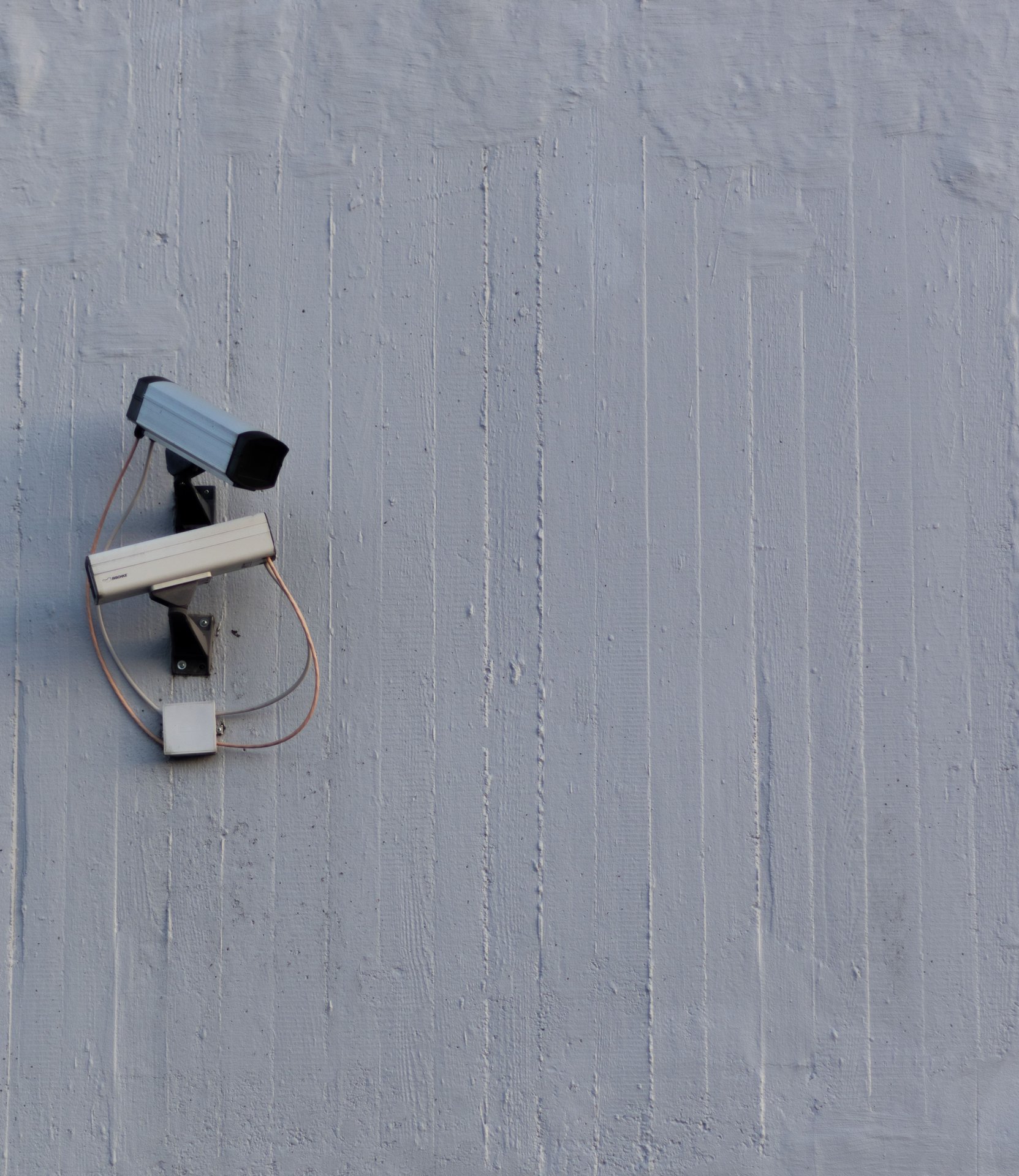
On October 6, a five-researcher team published CCDF (CCtv DeepFakes) on arXiv: the first benchmark dataset designed specifically to evaluate deepfake detectability in surveillance footage, not benign web content.[1]
The dataset contains 1,840 videos — 460 real + 1,380 generated — across 16 crime and accident categories. The size is not the story; the generators are. The synthetic videos were produced with OpenAI’s Sora 2, Google’s VEO 3.1, and xAI’s Grok Imagine — the three most capable commercial systems available, not older open-source generators.[1]
( Sora reached 20.4 million downloads in 5 months before closing; Grok Imagine generated 1.245 billion videos in the 30 days before v1.0 [1][3] )
The researchers benchmarked CCDF against ten state-of-the-art deepfake detectors covering different methodological families (spatial, spatio-temporal, CLIP-based, frequency-based, probabilistic). On the raw set, C-Forensics reached AUC 0.789 — the best. On the cleaned version (where resolution, frame rate, duration, and bitrate were standardized so detectors cannot exploit trivial cues), AUC collapsed to 0.515 — essentially random. L3DE fell to 0.256 on the cleaned version — worse than a coin flip.[1]
The paper’s conclusion is direct: the detectors “do not reliably distinguish CCDF’s generated videos from real ones, despite their strong reported performance on existing datasets.”[1] And this is not a single-detector problem — the performance drop on the cleaned set shows up across all 10 evaluated methods, not just the worst ones.[1]
Every CCTV deployment I review for tv4agent, the question almost never asked: can you cryptographically prove this video was not generated by Sora 2? Not “it looks real” — signed cryptographically with provenance metadata: model, version, model-weights hash, capture timestamp, and a hash of the capturing device. Without that signed metadata, the video is just a file of pixels.
Three clauses your enterprise CCTV/AI RFP in Q4 2026 needs to defend against the deepfake-as-evidence risk:
(1) Model-provenance metadata clause. The vendor commits to deliver, alongside any video clip used as evidence, a cryptographically signed package containing: generative-model identifier (if applicable) or capture-device identifier, firmware/codec version, model-weights hash (if AI-generated), signed timestamp, and signature from the device or the capture pipeline. The signature must be verifiable without vendor cooperation.
(2) Multi-detector ensemble clause. The vendor warrants that the deepfake detection system runs against a minimum of 3 independent detectors from distinct methodological families (spatial + temporal + frequency), and reports inter-detector agreement. An AUC of 0.5 on one detector on the cleaned set is not a defense; a 3-detector ensemble with measured agreement variance is.
(3) Client-controlled capture clause. The client retains control over the capture pipeline (the camera is the client’s, not the vendor’s) and selects which deepfake-detection model runs — not the vendor. This inverts the asymmetry: the video is the client’s, the signature is the client’s, the detection model is the client’s. The vendor cannot insert an AI-generated video into the stream and hand it over as “surveillance evidence” without violating three separate contract clauses.
P.D. How many of the incident videos in your surveillance system last year carried cryptographically signed metadata with model provenance? If the answer is “none” or “I don’t know,” today is a good day to add the 3 clauses before the first contested incident ends up in court where your footage cannot survive opposing counsel’s counter-analysis.
📰 Source: Chopin et al. CCDF, arXiv:2610.07939, Oct 6 2026 + UCF-Crime (Sultani 2018) + XD-Violence (Wu 2020) + Statista Sora downloads.
Sources
[1] Chopin, Swearingen, Ross, Dantcheva, Rathgeb — CCDF: A Benchmark Dataset for Deepfake Detection in Real-World Surveillance Footage, arXiv:2610.07939 (Oct 6 2026) — https://arxiv.org/abs/2610.07939
[2] Chopin et al. — CCDF paper PDF, full methodology + Table 5 cleaned AUC results + Table 6 raw AUC results + Table 7 GenVideo test set baseline — https://arxiv.org/pdf/2610.07939
[3] AppMagic via Statista — Sora app downloads September 2025 to February 2026, cited as CCDF ref [1] — https://www.statista.com/statistics/1624990/sora-app-downloads/
[4] Sultani, Choi, Ullah, Han, Park, Park — UCF-Crime: Real-world Anomaly Detection in Surveillance Videos, CVPR 2018 (MSU), base for 444 of 666 real CCDF videos — https://www.crcv.ucf.edu/projects/real-world-anomaly-detection-in-surveillance-videos/
[5] Wu, Hsieh, Chen, Chiu, Hu, Sun — XD-Violence: Local Feature Attention Network for Detecting Violence, ECCV 2020, base for 54 of 666 real CCDF videos — https://www.ecva.net/papers/eccv_2020/papers_ECCV/html/3316_ECCV_2020_paper.php