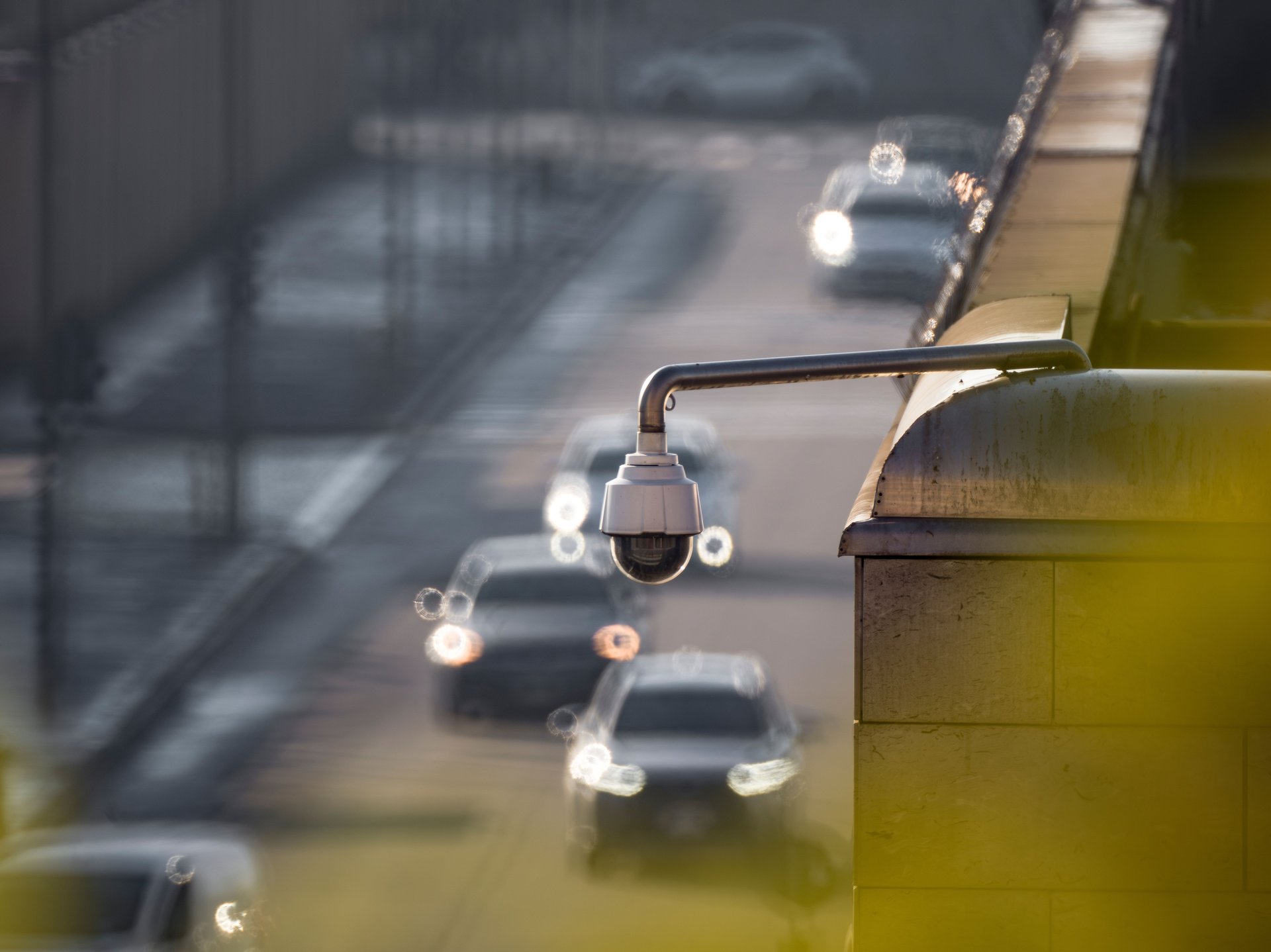
There’s a New York county that just published the one number nobody in the plate-reader debate wanted to put on the record: what happens when you turn the cameras off.
Dutchess County documented two official 30-day usage windows. In the 30 days before September 25, while the cameras were running, the county recorded the plates of 727,493 vehicles, with 100,046 “hits” — alerts from the National Crime Information Center, the National Center for Missing & Exploited Children, and New York State for suspended vehicle tags — and officers at the Real Time Crime Center made 188 searches.[1]
In the 30 days before October 14, with the cameras already offline since September 25, the figures were 435,928 plates, 41,320 “hits”, and 87 searches.[2]
And here’s the part that makes the number worth reading: the cameras were already disconnected. County District Attorney Anthony Parisi stated that “The cameras have been offline since September 25.”[3] Yet 435,928 plates were still recorded. That’s not a contradiction — it’s the difference between collection and retention. Killing the camera stops the capture. It doesn’t erase what was already captured, and it doesn’t change what the system keeps serving for the rest of the retention window.
Dutchess isn’t an isolated case. It’s one of roughly 1,500 agencies nationwide enrolled in a Flock program that posts local usage statistics for the previous 30 days, before the data is deleted.[1] The number that just surfaced wasn’t a transparency favor — it was the routine report of a program that already existed.
( the only official “what did shutting down save us” figure never gets published, because a county executive who publishes it loses the next election )
The lesson for an enterprise deployment isn’t political, it’s baseline arithmetic. If you’ve never measured your own baseline, you don’t know what you’re signing. Three clauses for your RFP:
- Capture-volume baseline clause. The provider must publish a per-30-day-window count — plates read, alerts generated, searches executed — on a fixed cadence and format, deliverable to your auditor.
- Retention-vs-collection distinction clause. The contract must explicitly separate the capture period from the retention period, and state that deactivating the source does not retroactively delete retained history.
- Search-volume baseline clause. If the real value in your network sits in the 87 searches — not the 727,493 plates — then the number you negotiate is search capacity, not camera coverage.
And the honest counterweight, because the data reads backwards too: the county’s district attorney admitted that “Decommissioning this technology has created a gap in our investigative capabilities that we must address.”[3] Shutting down does carry a real operational cost. The question for a security director isn’t whether to shut down — it’s what stops working, and how much of that capability you still need once the budget shrinks.
One more detail nobody in this debate mentions: the legislative resolution ordering the cameras covered with opaque material applies to the 65 cameras the county owns; another 372 sit on private land or on state- and municipally-controlled roads.[2] The law that shuts down your network and the law that covers your neighbor’s cameras are not the same law.
P.D. How many plates does your network read per day, and how many searches actually run against them? If you don’t have both numbers separately, today’s a good day to start measuring them.
📰 Sources: The Current (Sep 25 and Oct 16, 2026) + Mid-Hudson News (Oct 14, 2026), figures verified verbatim against the fetched pages.
Sources
- The Current — Dutchess to End Flock Camera Use (Sep 25, 2026) — 30-day window before Sep 25: 727,493 plates / 100,046 hits / 188 searches; ~1,500 agencies enrolled in the 30-day statistics program; contract with 65 cameras expired Aug 28; 20 “non-negotiable” changes demanded by Parisi.
- The Current — Dutchess Votes to Cover Flock Cameras (Oct 16, 2026) — 30-day window before Oct 14: 435,928 plates / 41,320 hits / 87 searches; 65 county-owned cameras vs 372 on private/state/municipal land; county attorney’s Sept 30 demand notice with removal by Oct 30.
- Mid-Hudson News — Legislature moves forward to ensure DA and Sheriff don’t use Flock (Oct 14, 2026) — “cameras have been offline since September 25”; DA’s “gap in our investigative capabilities” quote; 64 county cameras as reported by this source.