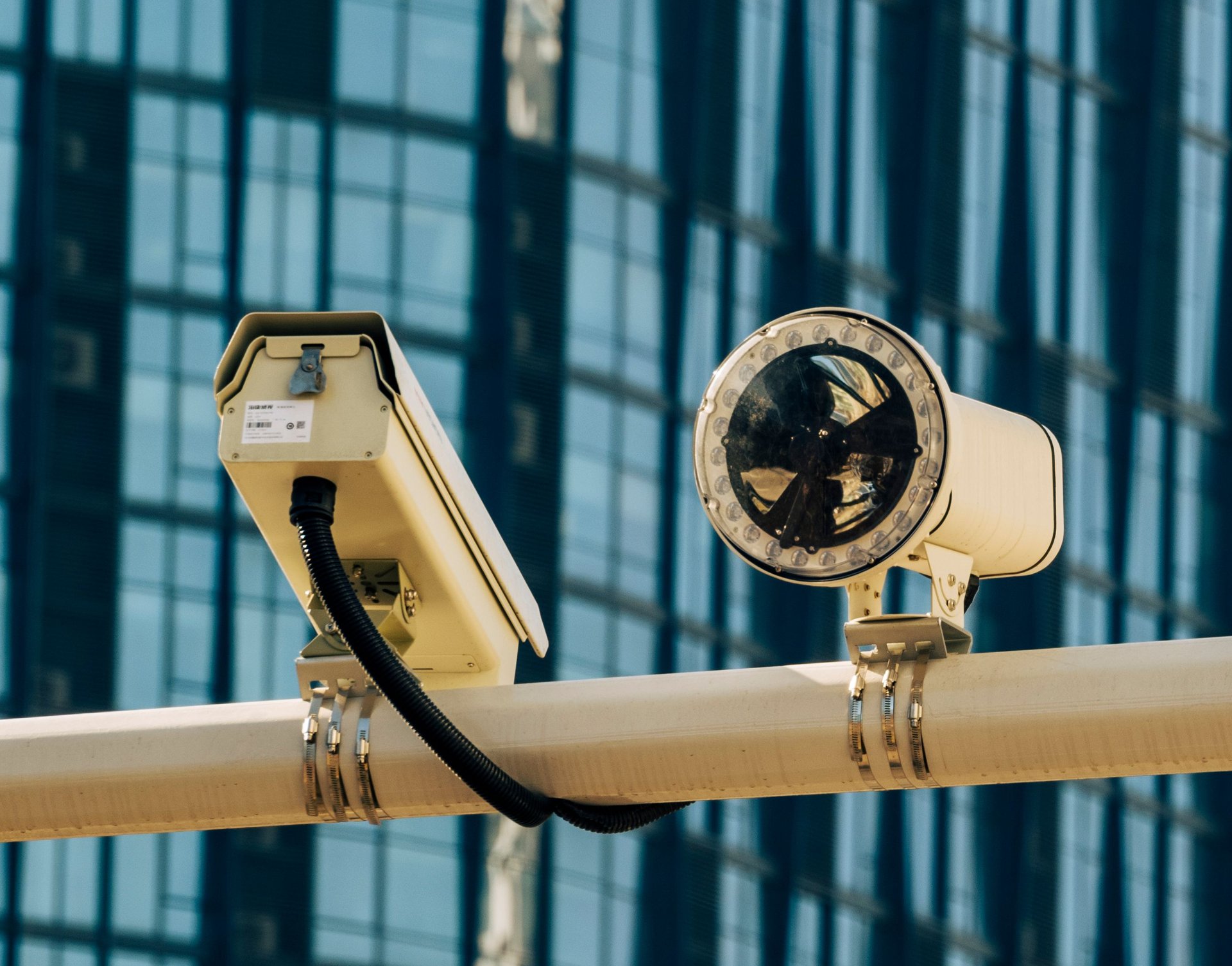
St. Lucie County went to take its cameras down. It found 14 that weren’t on the list [5].
And it had nobody to call.
St. Lucie County, Florida, started dismantling its plate readers after the state Department of Transportation revoked approvals for the units sitting on state rights-of-way [5]. The official count was 52 authorized cameras [2]. When county staff compared what was actually in the field against their own permit registry, they counted 66 [5]. The extra 14 were installed on county right-of-way without a permit [2].
Three of those 14 were claimed by the Sheriff’s Office — with no explanation for why the required permits had never been obtained [1]. The county’s two other law enforcement agencies said none of them were theirs [5]. That left 11 cameras with no publicly identified owner [5].
The provider’s explanation was a process failure, not an act: a Flock representative told WQCS that “there may have been miscommunication between them and law enforcement regarding permitting. They thought one permit covered more than one camera type of thing” [3]. In other words: the county’s permit registry and the vendor’s registry never got reconciled because nobody reconciled them.
The question nobody could answer was the first one: who put them up? Because that wasn’t an administrative detail. A Flock camera sends what it reads to the account of the customer running it, and that customer decides how long the data is kept and which other agencies can search it [5]. Here the customer was unknown. County officials didn’t know who installed the 11, whether they were still recording, or who might be able to search what they captured [5].
What they could do was not technical. It was optical. Interim county administrator Mayte Santamaria put it plainly: “It’s like a bright red notice that says you have 30 days to remove this, and we will also bag the cameras so they’re not operable” [2]. County communications manager Erick Gill said the bags would go on while the deadlines — which fall between October 16 and October 20 — ran out [5]. American Resolve confirmed the 11 unclaimed units were subsequently covered and posted [6].
(St. Lucie Voice, covering the same investigation, puts the number at 13 unpermitted cameras rather than 14, and attributes the difference to one camera that turned out to sit on a Port St. Lucie road instead of a county road [4]. It also mentions black tarps rather than bags [4]. The county had two counts and two methods in public view, and neither was settled before the deadline.)
The point for an enterprise buyer isn’t Florida. It’s that an unknown customer can end up inheriting your network. The county owned the road, held the inventory, had voted to remove the cameras — and still had no contractual authority to switch off eleven devices operating inside its own property. Its only move was to post a notice and cover the lens.
And at the other end of the same county, the camera registry was never reconciled in a documented way. As of October 23, volunteers had documented 99 plate readers inside Port St. Lucie’s city limits — far more than the 18 the city said were its own [5]. Another 36 were documented in Fort Pierce [5]. Statewide, Finding Flock documents 9,606 readers in Florida, about 75% of them made by Flock Safety [5].
And the mess did not stop at the county line: Fort Pierce, the county seat, had indicated that roughly 20 cameras would remain operational after the required removals, at locations outside the state and county orders [7]. As of October 9, no independently verified inventory existed of which cameras were still active [7].
(Those Finding Flock counts come from citizen volunteers, not an official audit. They are a signal that the gap between what was declared and what was installed was not limited to the unpermitted cameras.)
The three numbers an RFP should be able to answer
This is what St. Lucie could not answer about its own network, and it is exactly what any video analytics operator should be able to answer about theirs.
1. How many cameras do you have, and how many are in your registry? The 52-to-66 gap and the 18-to-99 gap are different things: the first is a documented missing permit, the second is an inventory nobody reconciled. A quarterly asset reconciliation against the provider’s registry costs almost nothing, and it is the only thing that turns “I know what I installed” into “I know what’s operating.”
2. Who owns each one? A serial number, a permit ID, and a physical location that line up. The county owned the road and figured out on its own that cameras were missing from the list. Anyone running a large fleet can hit the same wall: a camera installed by an integrator, inherited from a former branch, or mounted by a third party running its own contract.
3. What happens to the data when you blind the lens? This is the uncomfortable part. Bags stop the capture. They don’t erase what was already captured, they don’t revoke the operator’s access, and they don’t close the account receiving the reads. A verifiable erasure clause — cryptographic, with a receipt — isn’t a regulatory luxury. It’s the only thing that survives an audit.
The other half: why the search log matters
Unpermitted cameras are the visible part. The part that gets audited is who searched them.
In the same county, former Fort Pierce officer Josepher Crutchfield was arrested on four felony counts after investigators found he had used the department’s Flock system 382 times between October 2025 and July 2026 to search the plate of a vehicle registered to his ex-girlfriend [5]. Later reporting describes the officer as fired and then arrested [6]. In a separate case, Haines City officer Christopher Goodson reportedly nearly doubled that number of searches while looking for his estranged wife [1]. Two Pinellas County deputies were arrested for invasive Flock tracking [1]. Nationally, the Washington Post has found at least 50 cases of similar police misuse [1].
(The chronology isn’t settled in the sources: one says Crutchfield resigned in August before the internal investigation finished and was arrested afterward [5]; another describes him as fired [6]. No source resolves the exact sequence.)
The point for the buyer isn’t the abuse — abuse is the visible extreme. The point is that search access has its own log, and that log is what separates an analytics program from an archive nobody watches. If you can’t produce who searched what, you can’t prove anything, you can’t audit anything, and you can’t answer a regulator asking about the retention period.
Port St. Lucie, the county’s largest city, has kept an “operational pause” on its 126 ALPR cameras since August 31, limiting access to “exigent circumstances” [4]. Its documented measure: deleting data seven days after collection [4]. That’s a Florida police department policy, not a vendor default — don’t generalize it. But it is the only citable, non-litigated retention benchmark in this entire debate.
P.D. Pull your last video analytics invoice and ask an uncomfortable question: how many of the cameras you’re being billed for show up in a physical inventory you performed yourself, with serial numbers and locations? If the answer is “I don’t know,” you already know what clause to write.
Sources
[1] Ars Technica — “Florida cops say they don’t know who owns 11 unpermitted Flock cameras” (Oct 1, 2026). https://arstechnica.com/tech-policy/2026/10/florida-cops-say-they-dont-know-who-owns-11-unpermitted-flock-cameras/ — accessed 2026-10-23.
[2] WPEC (kptv) — “St. Lucie County orders removal of all Flock license plate readers” (Sep 18, 2026). https://kptv.com/2026/09/18/14-unpermitted-flock-cameras-found-one-florida-county-nobody-is-claiming-them — accessed 2026-10-23.
[3] WQCS — “St. Lucie County discovers 14 unpermitted Flock Cameras as removal deadline nears” (Oct 5, 2026). https://www.wqcs.org/wqcs-news/2026-10-05/st-lucie-county-discovers-14-unpermitted-flock-cameras-as-removal-deadline-nears — accessed 2026-10-23.
[4] St. Lucie Voice (Charles Caloia) — “Mystery of 13 ‘unpermitted’ A.I. cameras endures here” (Oct 8, 2026). https://stlucievoice.com/2026/10/08/mystery-of-13-unpermitted-a-i-cameras-endures-here/ — accessed 2026-10-23.
[5] Finding Flock — “Mystery Flock Cameras in St. Lucie County, FL” (updated Oct 23, 2026). https://findingflock.com/learn/st-lucie-county-mystery-flock-cameras — accessed 2026-10-23.
[6] American Resolve — “After Florida removal order, 14 unpermitted Flock cameras found in St. Lucie County” (Oct 3, 2026). https://americanresolvenews.com/articles/story-670bfb3af9ad6155642e.html — accessed 2026-10-23.
[7] Port St. Lucie Talks — “Flock Cameras Removed in Fort Pierce as Surveillance Crackdown Continues Across St. Lucie County” (Oct 9, 2026). https://portstlucietalks.com/flock-cameras-removed-in-fort-pierce-as-surveillance-crackdown-continues-across-st-lucie-county — accessed 2026-10-23.
📰 Source: St. Lucie County FL — 52 authorized / 66 counted / 14 unpermitted / 11 with no identified owner — Finding Flock + Ars Technica + WPEC + WQCS, Oct 2026. ⚠️ The Washington Post is the original source cited by the secondary coverage but is not directly accessible (paywall); the verbatim quotes are attributed to the secondary outlets that reproduce them. The outcome after October 20 is not published — reported as unknown coverage, not as a county failure.